

What Happens When HVAC Systems Are Too Big (or Too Small) for the Job?
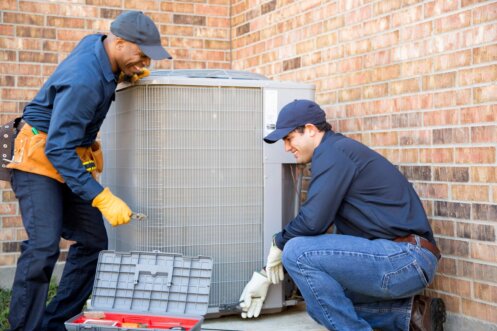
Too many homeowners assume that bigger always means better when it comes to installing a new heating system or AC. It’s a common mistake that leads to higher energy bills, uneven comfort, and systems that wear out faster than they should. The size of your HVAC system doesn’t just affect the air in the room; it affects your entire home’s efficiency and longevity.
Bigger Systems Run Short and Waste Energy
If your HVAC unit starts and stops too often, it may not be the thermostat’s fault. Oversized systems tend to cycle quickly, running in short bursts instead of steady stretches. That constant stopping and starting burns through electricity, wears out parts faster, and rarely brings indoor conditions to a stable level. It might cool or heat your space quickly, but it shuts off before humidity levels can level out or temperatures can stabilize across the home.
The effect feels like your house is always chasing comfort. Rooms heat up or cool down unevenly, and you might find yourself fiddling with the controls more than you expected. An appropriately sized unit should run long enough to reach the target temperature and stay there, not rush through the cycle and leave the space feeling off balance.
If your system sounds like it’s turning off and on every few minutes, it could be working harder than it should. That’s not just inefficient, it’s a sign that it’s mismatched for the space.
Undersized Units Fall Behind in Extreme Weather
When the temperature spikes or drops, smaller HVAC units often can’t keep up. A system that’s too small for your square footage will run nearly nonstop. Even though it’s trying its best, the output won’t match what the home needs, especially in multi-story spaces or homes with older insulation.
You might notice the system working overtime during the hottest part of the afternoon, but your living room never cools past 77 degrees Fahrenheit. Or the mornings feel chilly even though the thermostat is set to a comfortable range. That constant strain drives up energy bills without delivering comfort.
Long runtimes also increase wear on the motor and compressor. These are the pieces most likely to fail early. A unit that never shuts off won’t last as long, which means you’ll be looking at repair bills or replacement sooner than you should.
Size Affects Humidity and Indoor Air Feel
Air conditioning doesn’t just cool the space. It removes moisture as it runs, which plays a major role in how comfortable your home feels. If your system is too large, it might cool the air so fast that it never has time to pull out that extra humidity. That leaves the air feeling damp, sticky, or clammy even if the thermostat says everything’s fine.
This gets worse in homes with poor ventilation or single-zone layouts. Bedrooms upstairs might feel muggy while the downstairs chills in record time. That’s not because of faulty ducts or bad airflow but because the system never had time to finish the job.
If you’ve ever felt like your home was cool but still uncomfortable, that’s usually what’s happening. A well-sized system runs long enough to do both jobs: reach the temperature and balance the humidity. When those things sync up, you’ll feel cooler without needing to drop the thermostat.
Square Footage Isn’t the Only Sizing Factor
While square footage gives you a starting point, HVAC sizing depends on much more than that. Ceiling height, insulation, window exposure, and layout all change how heating or cooling moves through your home. A 1,500-square-foot ranch home with low ceilings needs a different system from a 1,500-square-foot split-level with a vaulted ceiling in the living room.
Sun-facing walls can add heat during the day. Large, older windows lose warmth during chilly mornings. Open-concept spaces flow differently from tightly closed rooms. Even things like your attic insulation and garage access affect how quickly the house gains or loses heat.
That’s why calculators based on square footage alone tend to miss the mark. You need a load calculation that factors in every element of your home’s structure, airflow, and materials. That’s the only way to get a match that works for both comfort and cost efficiency.
Ductwork and Airflow Should Match the Equipment
Even the best HVAC system will fall short if the ductwork doesn’t support it. Oversized systems create more airflow than the ducts can handle, which causes noisy vents and hot spots in rooms that get skipped. Undersized systems often struggle with resistance in older ducts, especially if the layout has too many sharp turns or long runs.
Air has to move at a speed that matches the design of your system. If the airflow is too strong, it may blast out of some vents and barely reach others. If it’s too weak, the conditioned air may never travel far enough to cool bedrooms at the end of the ductwork.
Sizing also affects how the return air gets pulled in. A system that can’t take in enough air will choke itself and burn more energy to produce less comfort. Getting the ductwork evaluated alongside the equipment helps catch these mismatches before they start making things worse.
Sizing Errors Shorten System Lifespan
Heating and cooling systems are built to last, but they need to run within their intended range. When a system is too large, it wears out from constant starting and stopping. When it’s too small, it burns out from constant running. Both lead to premature breakdowns, expensive repairs, or total system replacement years earlier than expected.
If your system has had more than one major repair in a short time and it still doesn’t feel like it’s doing the job right, sizing might be the problem. Replacing parts can only go so far if the core mismatch keeps overloading the system.
HVAC Load Calculations Help You Avoid Errors
Rather than guess, professionals use Manual J calculations to determine what size HVAC system a home actually needs. These calculations take into account the home’s layout, insulation levels, window sizes, doorways, ceiling heights, and more. It’s like running a full profile of your home’s heating and cooling behavior instead of using a one-size-fits-all number.
If your last HVAC estimate didn’t include a load calculation, consider revisiting your sizing. Contractors who skip this step often leave you with a system based only on square footage or what “worked last time.” That’s how people end up with oversized or undersized units that never seem to perform well.
The right system feels quieter, steadier, and more balanced. It does not surprise you with spikes in your utility bill or leave you sweating in one room while another freezes. A proper load calculation is what gets you there.
Schedule Your HVAC Installation
Crystal Blue Plumbing Heating & Air in Sacramento, CA also provides system repairs and seasonal maintenance to help keep everything running smoothly. Call Crystal Blue Plumbing Heating & Air to schedule your consultation for heating and AC installation and other HVAC services.